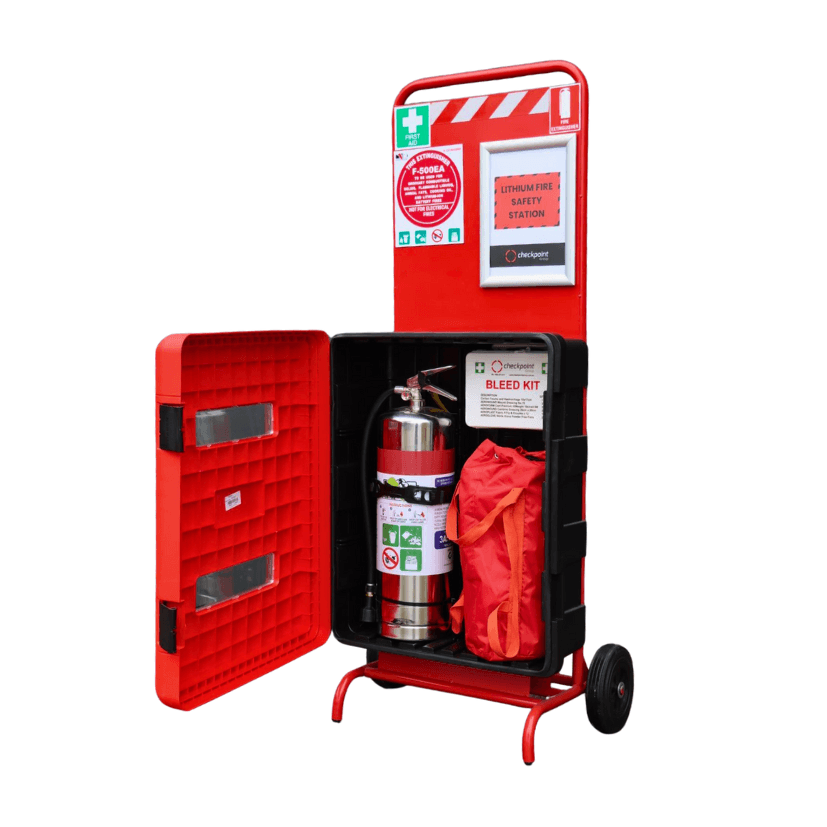
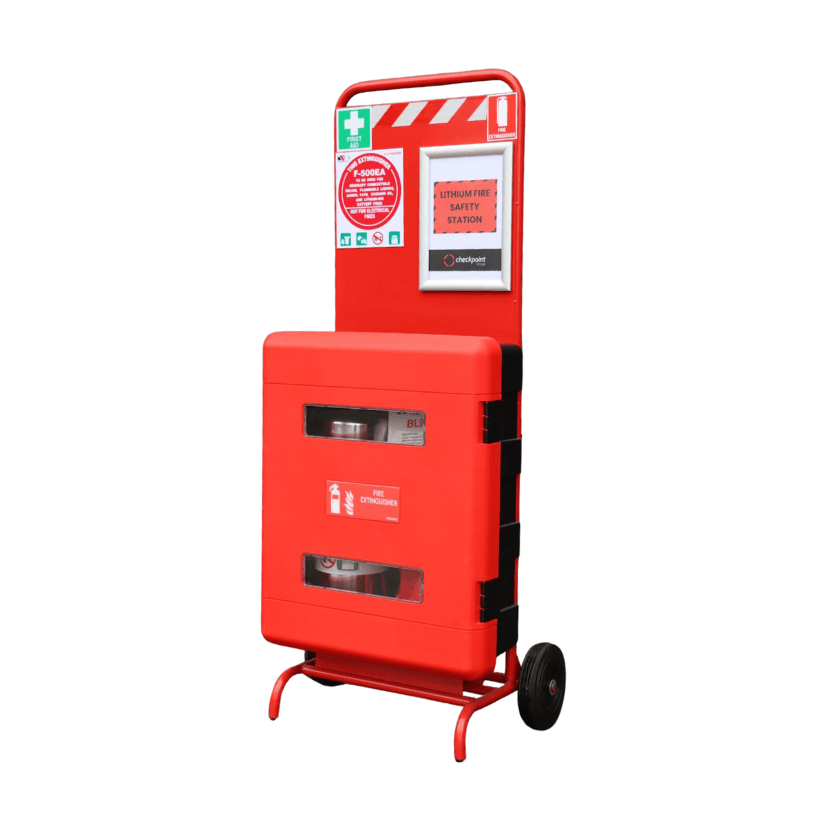
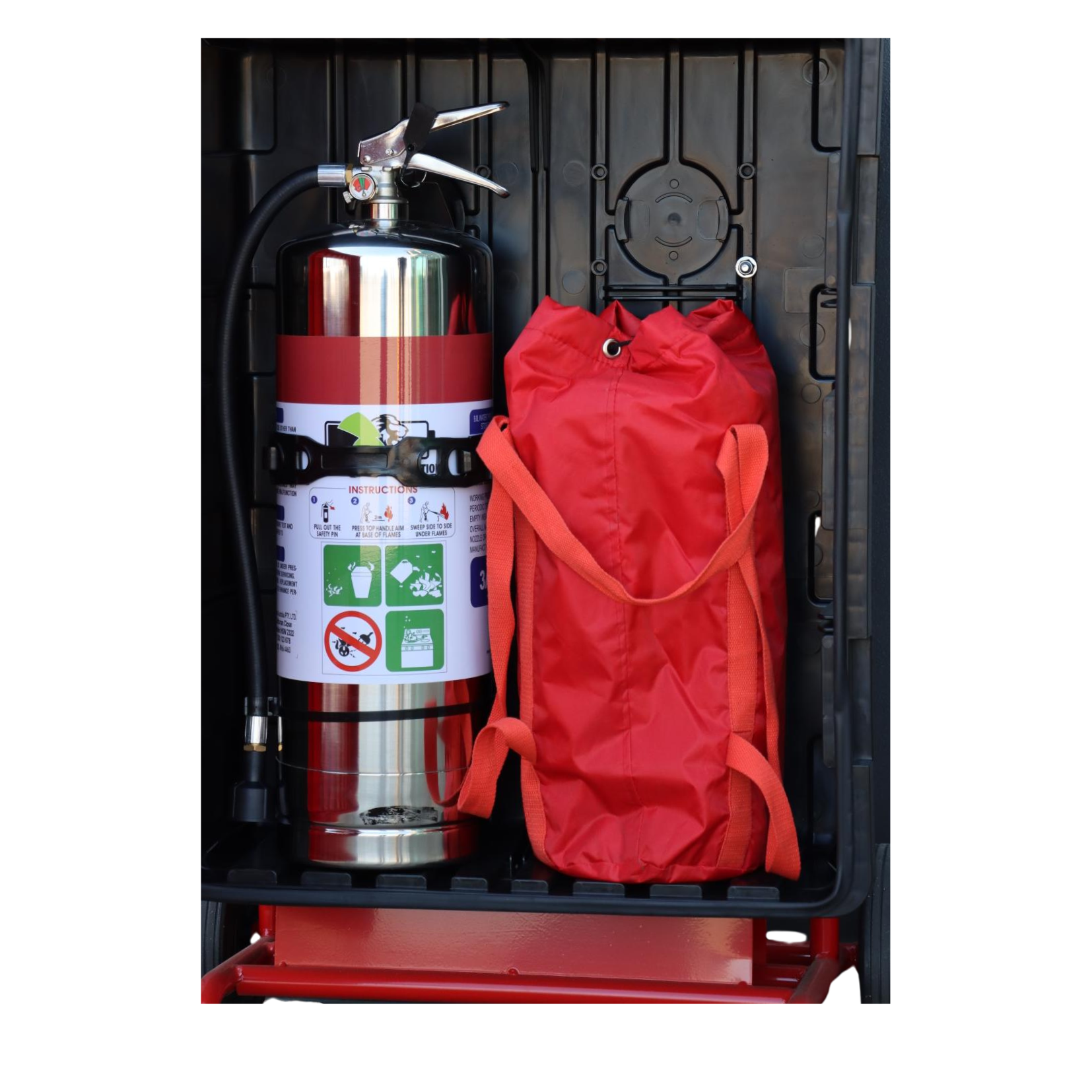
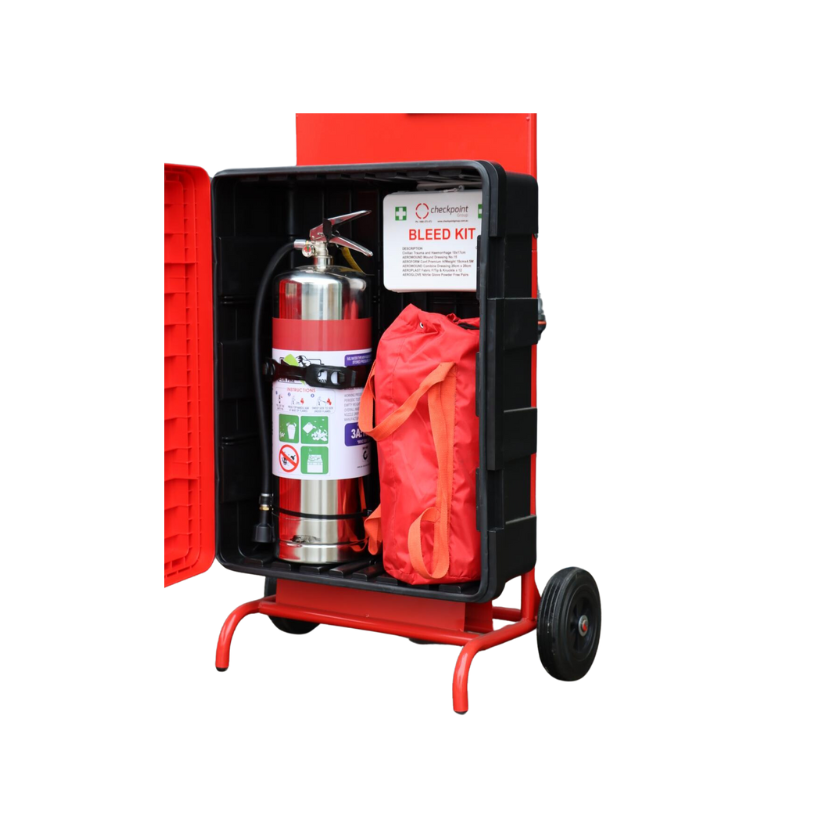
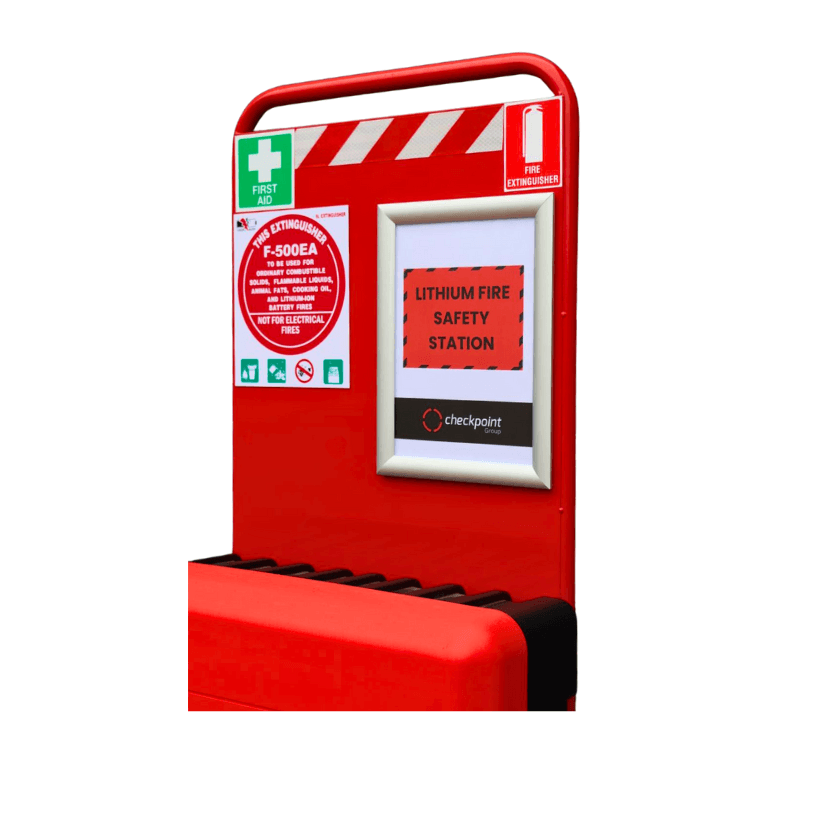
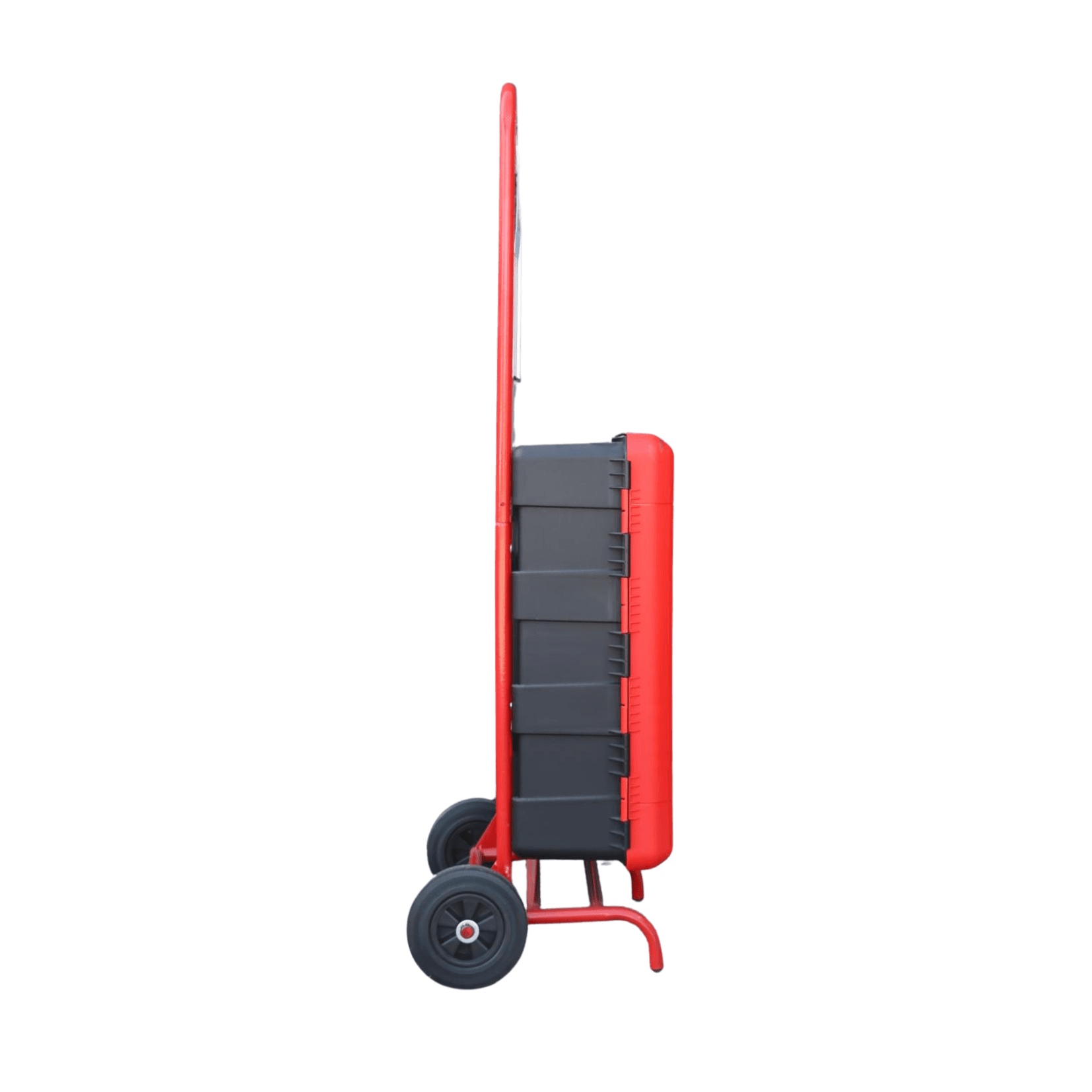
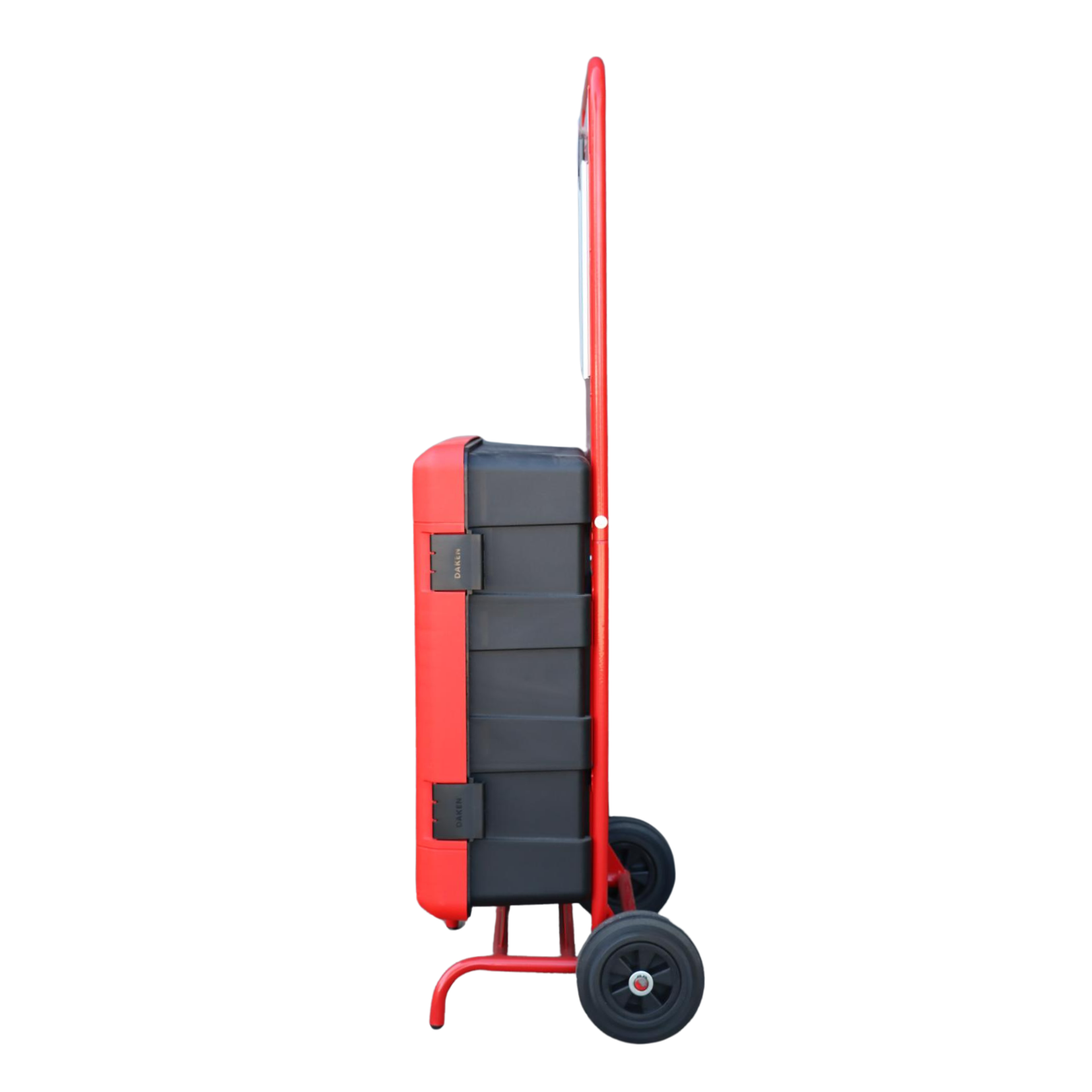
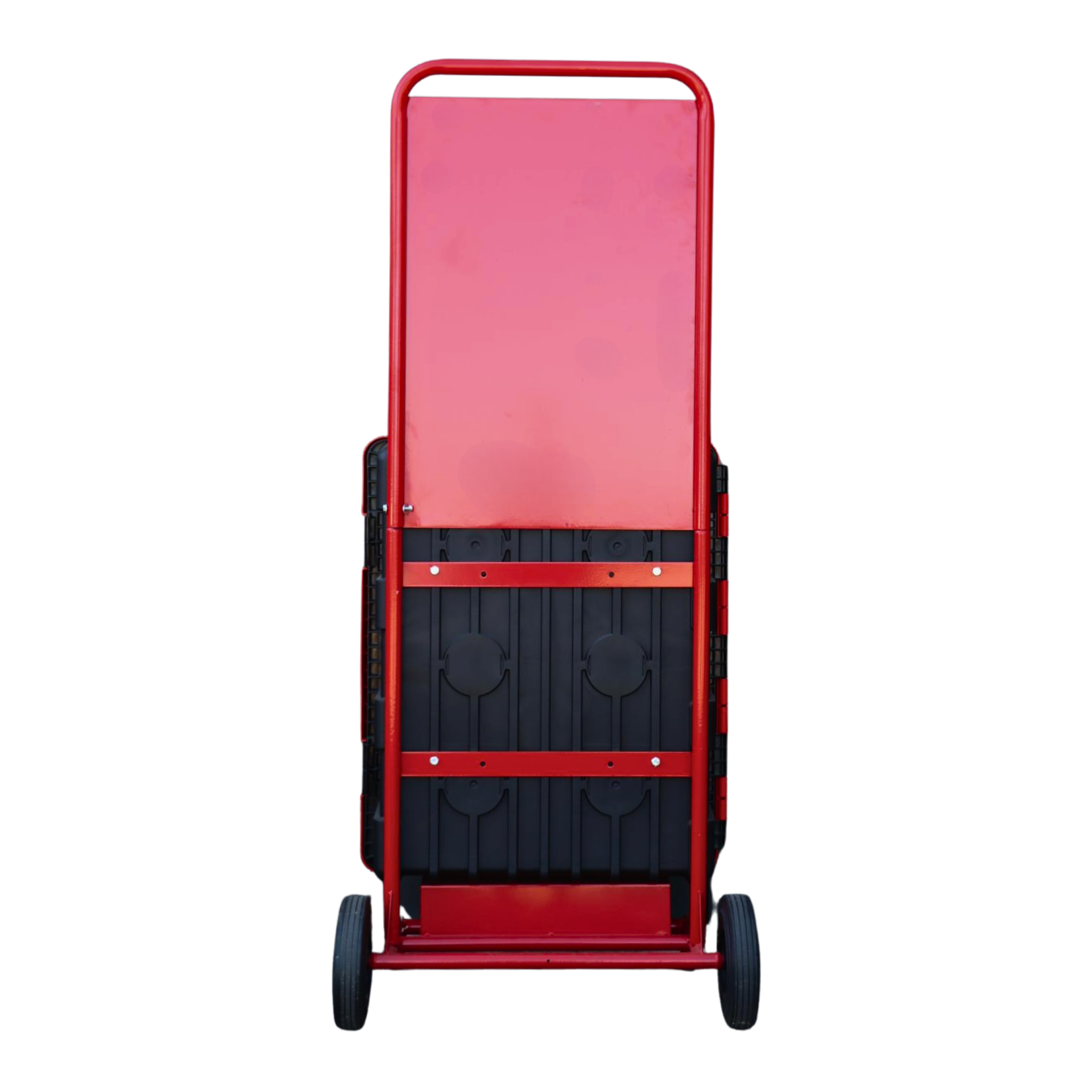
A lithium battery fire safety station holds first-response containment equipment for lithium-ion incidents in one marked location. The station sits on a wheeled trolley with a weatherproof cabinet. It carries a 9-litre F-500 extinguisher, a lithium-ion fire blanket, a bleed kit and identification signage.
How the Station Helps
The station gives a trained responder a chance to stop a small lithium-ion incident before it spreads, and equipment to protect the surroundings when it cannot.The F-500 EA agent works by cooling. Independent testing has shown it achieves suppression on single battery packs where powder and foam do not, and that treated cells did not reignite. The 9-litre unit was tested against a battery fire of approximately 4.8 kWh.Scale sets the limit. A phone, a tool pack or an e-bike battery sits inside what a 9-litre unit can cool. A charging rack, a pallet of packs, an electric vehicle or a battery energy storage system does not. Agent only cools the cells it reaches, and a sealed pack casing keeps it out.
Fire and Rescue NSW advises that a person trained to use a nearby extinguisher may do so from a safe distance, and to call Triple Zero in every case because a battery can reignite if it has not cooled enough. Train your responders to that instruction, whatever equipment you hold.
Lithium-Ion Failure Characteristics
- Thermal runaway involves violent bursting of one or more battery cells.
- Vented gases, vapour and smoke are toxic, flammable and explosive, and must not be inhaled.
- Events can involve flames, toxic vapours and metal projectiles, which sets the standoff distance for any responder.
- Reignition can occur hours or days later where the cells have not cooled enough.
Emergency Plan Obligations for Sites Holding Lithium Batteries
Every Australian workplace must prepare, maintain and implement an emergency plan. Sites holding lithium batteries in volume carry an extra step in NSW.Fire and Rescue NSW set a threshold of 25,000 kg of lithium batteries on 5 December 2024. The total counts lithium-ion, lithium-ion polymer and lithium metal polymer batteries, standalone or built into packs, battery energy storage systems, electric vehicles and plant associated with the site. At or above the threshold, the PCBU lodges the emergency plan with Fire and Rescue NSW together with an Emergency Services Information Package. The
FRNSW position statement sets out four items for that package.
- A site plan showing the location, battery type or chemistry, and quantities of lithium batteries.
- Details of the fire safety measures and containment features on the site.
- The battery manufacturer's recommendations, including isolation or shutdown procedures and the appropriate extinguishment method.
- Current Safety Data Sheets for the batteries held.
Most sites sit below 25,000 kg. The duty to hold a workable emergency plan applies at any volume, and the plan has to record where response equipment sits. A marked station gives that question a fixed answer.
What Is Included
- Medium safety station, red, on a wheeled trolley frame.
- Weatherproof cabinet.
- 9-litre F-500 extinguisher.
- Lithium-ion fire blanket, 2m x 2m.
- Bleed kit.
- A4 snap frame for the site emergency procedure.
- Reflective tape kit.
- First aid symbol sticker.
- Fire extinguisher location sticker.
- Lithium-ion location sticker.
Where to Use
Position the station at or near the charging point, the battery store, and any area holding battery-powered plant.
- Warehouses and distribution centres.
- Manufacturing and workshops.
- Construction sites.
- Mining operations.
- Data centres.
- Electric vehicle workshops.
- Battery charging rooms.
- Universities, schools and councils.
- Hospitals and utilities.
Limitations You Should Know
- No Australian Standard covers extinguishing agents for lithium-ion battery fires.
- Fire authorities advise members of the public not to attempt to extinguish a lithium-ion battery fire, and to leave the area and call Triple Zero.
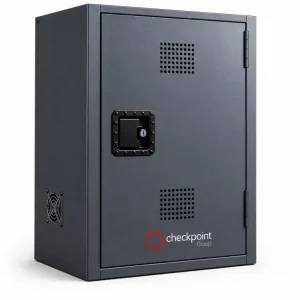
- A response station controls the consequence of a failure. It does not control the cause. Charging and storage controls do that, and our lithium-ion battery charging and storage cabinet covers that side.
For the full site picture, including the SafeWork NSW failure triggers and the Fire and Rescue NSW incident numbers, read our
guide to lithium-ion battery fires on site. Where the risk is general rather than battery-specific, the
Fire Warden Responder Station covers the same ground for conventional fire types.


 Aero
 Aero


Reviews
There are no reviews yet.