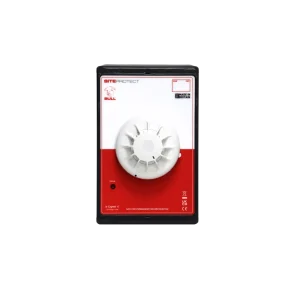
The ORI-40 is a cellular evacuation siren. It connects over an IoT network instead of radio frequency, which removes the range limit between devices. Two sirens 400 metres apart behave the same as two sirens in the same shed.That's the whole reason to choose it. Radio frequency mesh works well when devices sit within reach of each other. It struggles across a linear rail corridor, a large civil site, a quarry, or a multi-building campus with dead zones between structures.
Specifications
- 127dB 1680Hz Super M siren
- Compatible with other 12V or 240V sirens
- IoT cellular connectivity with no range limitation between devices
- Reports directly to the smartphone app without a TCU
- Large aluminium backboard for mounting and visibility
- Activated by the system, a paired trigger, the TCU or the app
- Siren pattern and duration are configurable
- Network loss notification for connectivity or power failure
- Authority protocols for structured evacuation approval
- Plug and play: connect to mains, let it find the network, then name it by location
What cellular connectivity costs you
Two things are needed before this siren works, and neither is optional.
Budget for both from the start. A cellular siren without a subscription is a mounted box. If your devices sit within radio frequency range of each other and you don't need remote access, the
standalone radio frequency siren does the same job at the same 127dB without an ongoing cost.
Naming devices by location, not number
When you power the siren up, you name it. Do this properly. "Siren 6" tells a responder nothing. "Batch Plant, North Gate" tells them where to go and what they'll find when they get there.The app reports by that name. So does the log. If your site names are vague now, they'll be vague in the incident report later.
Where cellular sirens earn their place
Cellular suits sites where radio frequency can't reach or can't be relied on:
- Linear infrastructure such as rail, road and pipeline corridors
- Quarries, mine sites and large civil works
- Multi-building campuses with structural dead zones
- Remote or unmanned assets where nobody is on site to notice a fault
- Sites needing app visibility without installing a control unit
That last point matters commercially. The ORI-40 reports to the app directly, so you don't need a
Touchscreen Control Unit to see what your sirens are doing.
Meeting your alerting obligation
Under
regulation 43 of the model WHS Regulations, your emergency plan has to provide for effective response, evacuation procedures and effective communication with everyone at the workplace. On a spread-out site, "everyone" includes the crew working 600 metres from the office.A siren nobody can hear doesn't discharge that duty. Neither does one that dropped off the network in March.Tell us the distances between your work areas and we'll advise whether cellular or radio frequency suits the layout. Call
1800 273 473 or
send through a site plan.


 Aero
 Aero


Reviews
There are no reviews yet.