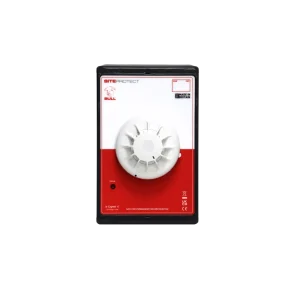
This device puts the trigger, the siren and a flashing strobe on one backboard. You mount one unit instead of two, and you power one point instead of two.That's a practical saving on sites where mounting positions are scarce. Fit-out floors with no spare wall. Compounds where every surface is temporary. Buildings where the client won't approve more fixings than they have to.
Specifications
- Dedicated trigger for alert activation and deactivation
- High-decibel siren with flashing strobe light
- High-visibility backboard
- Mains or battery power
- Wireless with no repeaters required
- Operates as a standalone device or as part of a larger system
- Adjustable siren settings
- Evacuation event approval available
- Pairs with other triggers and sirens to build zones
- Reports exact device location through a TCU or the smartphone app
Battery power changes where you can put it
Most evacuation hardware needs a power point. This one doesn't have to. Battery operation means you can mount it at a work face, in a stairwell core, or on a temporary structure with no supply run to it.That's worth planning around. The usual constraint on siren placement is where the power is, not where the people are. Take that constraint away and you can put the device where it's actually needed. If you're running units on battery, factor in
rechargeable batteries and an
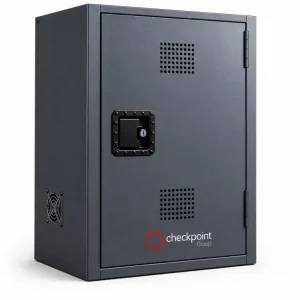
eight-port charger so you always have charged spares on the shelf.
Building evacuation zones
Pairing lets you group devices. Press a trigger on Level 4 and sound only Level 4, or sound the whole site. Both configurations are set at commissioning.Zoning suits staged construction and multi-tenanted buildings. It stops you evacuating 300 people for an incident affecting twelve, which is the fastest way to teach a workforce that the siren doesn't mean anything.Zone alerts need a
Touchscreen Control Unit or the smartphone app to manage the approval step.
Combined unit or separate devices
The trade-off is sound output. A combined unit produces less than the dedicated
standalone evacuation siren, which runs at 127dB. The strobe compensates visually, and on most fit-out and internal work it's more than enough.Choose a combined unit where mounting positions or power points are limited, or where the area is small and enclosed. Choose separate devices where you need maximum audible coverage: open yards, plant rooms, anywhere with heavy background noise.Safe Work Australia's
emergency plans guidance asks you to plan for people with hearing or vision impairment. A combined unit covers both channels at once, which is one argument in its favour that pure decibel comparison misses.Send us your floor layout and we'll mark up where combined units work and where you need a dedicated siren. Call
1800 273 473 or
email the drawings through.


 Aero
 Aero


Reviews
There are no reviews yet.