

Fire Hose Reels: 5 Rules Auditors Check First

Fire hose reels earn their place on a wall by doing one thing no extinguisher can: delivering water for as long as the mains keep supplying it. In exchange, AS 2441 expects each reel to cover every part of the floor it serves, sit within reach of an exit, and pass a flow test year after year. Miss the coverage, block the access, or borrow the hose to wash down equipment, and the reel fails its audit before anyone opens the valve. The rules below decide whether yours would pass.
How Fire Hose Reels Work
A fire hose reel connects directly to the water mains through an isolation valve. Open the valve, run the hose out toward the fire, and the nozzle gives you a controllable stream you can sustain for as long as the situation demands. That continuous supply is the point. An extinguisher gives you seconds of discharge; a hose reel keeps working while you attack the base of the flames.
The trade-off is fire class. Hose reels suit Class A fires only: wood, paper, textiles, rubber and other ordinary combustibles. Water on an electrical fire or a burning flammable liquid makes the emergency worse, which is why every reel needs correct signage and induction training behind it.
Our Commander fire hose reels carry certification to AS/NZS 1221, the manufacturing Standard covering the reel, hose and nozzle as a single unit, and come in fixed and swinging models with 36 metre and 50 metre hose lengths.
The reel is one part of the system. The drum, hose, nozzle, isolation valve, hose guide and signage are each specified separately, and each one fails separately. Our guide to fire hose reel systems covers what every part has to do and which standard controls it.
When the Law Requires a Hose Reel
The National Construction Code decides which buildings need hose reels at all. The fire hose reel provisions in NCC 2025 Volume One set out where a system must serve a building under the Deemed-to-Satisfy provisions, and just as importantly, where it need not.
The exemptions surprise people. Class 2, 3 and 5 buildings, Class 4 parts, Class 8 electricity network substations, Class 9c aged care facilities and school classrooms do not require hose reels. NCC 2025 added a further concession for areas under 100 square metres that are fire-separated to 60/60/60, fitted with a self-closing or automatic closing fire door, and provided with extinguishers to AS 2444 on the egress side of the entry door. Wherever the exemption applies, portable extinguishers must cover that risk instead, selected and positioned under AS 2444. Our guide to the AS 2444 placement rules walks through exactly what that involves.
For the buildings that do need them, warehouses, factories and most industrial occupancies among them, the Code hands the installation detail to AS 2441, the Standard covering distribution, location and installation.
The 5 Rules Auditors Check First
AS 2441 reads as a placement manual, and audits keep finding the same breaches of it:
- Coverage. A standard 36 metre hose, plus a 4 metre allowance for the water stream, must reach every part of the floor area the reel serves. Extensions and re-partitioned floors quietly break this.
- Position. Reels belong within 4 metres of an exit, along a normal path of travel, and never inside a fire-isolated stairwell, where a run of hose would chock the door open and feed smoke into the escape route.
- Fire doors. If the hose must pass through a fire or smoke door to reach the far corner, the layout does not comply.
- Signage. A reel nobody can find is a reel nobody uses. Each unit needs a fire hose reel location sign mounted where sightlines actually work.
- Service history. AS 1851 puts hose reels on a six-monthly service cycle, with an annual flow test proving the reel still throws a usable stream. Our breakdown of fire equipment testing intervals covers the schedule and the NSW enforcement change behind it.
Then there is the classic: using the reel to wash down floors or plant. A fire hose reel is fire equipment, not site plumbing. Misuse wears the hose, hides faults, and leaves you exposed on your maintenance obligations.
How to Use a Fire Hose Reel in an Emergency
In an emergency, knowing how to properly use a fire hose reel is critical. Below is a step-by-step guide:

- Raise the alarm first. Water comes second.
- Confirm the fire is Class A. Never electrical, never flammable liquids.
- Turn on the isolation valve located near the reel.
- Pull the hose towards the fire, unwinding it completely.
- Open the nozzle to begin water flow and aim at the base of the flames.
- Use a sweeping motion to control and extinguish the fire.
- After use, shut off the nozzle and valve, and rewind the hose carefully.
Report the use so the reel gets a service before it returns to standby. Anyone expected to operate one should meet it during induction, not during a fire.
A Reel Built to Pass Its Flow Test
Every Commander reel we supply pairs AS/NZS 1221 certification with the build quality a flow test rewards: brass nozzle moulded to the hose, stainless steel inlet pipe, and a Watermarked ball valve delivering full flow in a single lever movement. The 36 metre fixed model suits most single-floor coverage plans, with 50 metre and swinging variants for larger or awkward layouts. Where dust, forklifts or weather threaten the unit, a Commander hose reel cabinet or recessed cabinet keeps it protected without slowing access.
Best Fire Hose Reel Products in the Market
If you're looking for a fire hose reel that is safe and reliable, one that won’t fail when it counts, here are some widely used models:

Commander Fire Hose Reel (36m x 19mm Fixed)
Constructed with a stainless steel inlet pipe and a powder-coated red finish, this reel is known for its durability. It includes a high-quality brass nozzle and components that minimise leakage and deliver consistent performance.
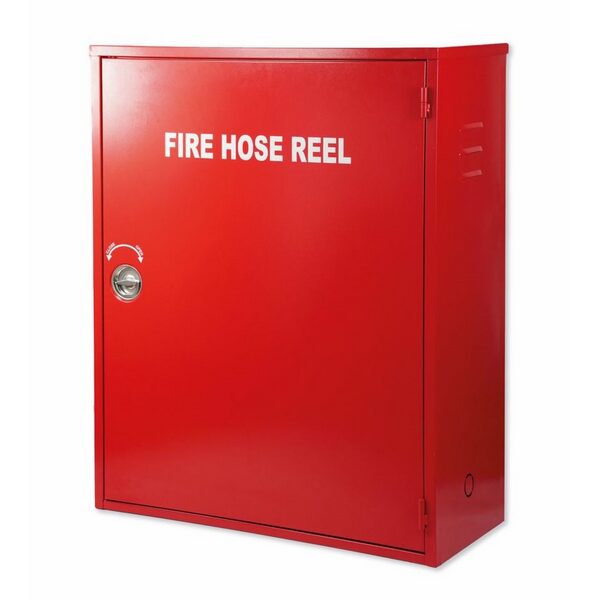
Commander Fire Hose Reel Cabinet
Made of robust steel, this cabinet protects your hose reel while allowing quick access. Designed with a user-friendly push-button mechanism and wall mounting holes for secure installation.

Recessed Fire Hose Reel Cabinet
With a heavy-gauge steel build and discreet flush-mount profile, this unit is ideal for fit-outs that require fire safety integration without disrupting interior design.
Fire hose reels remain a key component of fire response planning in commercial and industrial settings. Ensuring you have the right type of reel, understanding how it works, and training your staff in proper usage can significantly improve fire preparedness and reduce risk.
Unsure whether your floor still achieves full coverage after a fitout change? Email your floor plan to sales@checkpointgroup.com.au or call 1800 273 473 and we will review your reel positions against AS 2441 before your next audit does.


