

What Fire Extinguisher Does Your Home Actually Need?
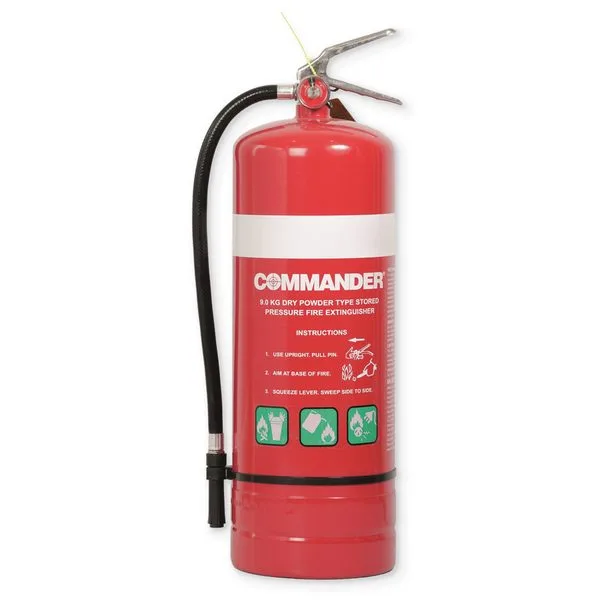
A home fire extinguisher is one of the cheapest, most useful pieces of safety gear you can own, and one of the most overlooked. Fire and Rescue NSW responds to around 4,500 home fires every year, and about half of them start in the kitchen, mostly from cooking left unattended. A working extinguisher within reach can stop one of those before it spreads. This guide covers which extinguisher your home actually needs, where to put it, and the one fire it should never touch.
Which Fire Extinguisher Does a Home Need?
For most households, the answer is a dry chemical powder (ABE) extinguisher. It's the most versatile portable unit you can buy, covering the three fire types a home is most likely to face:
- A: ordinary combustibles like wood, paper, furniture, and fabric.
- B: flammable liquids like petrol, oil, and solvents in the garage or shed.
- E: electrical fires from appliances, powerboards, and wiring.
That single-unit versatility is why ACT Fire & Rescue names the ABE dry powder as the most versatile extinguisher for the home. A 4.5kg Commander ABE suits most houses, big enough to matter, small enough to handle. If you want the full technical detail on ratings and standards, our guide to ABE fire extinguishers covers it.

The One Fire an Extinguisher Shouldn't Fight: The Kitchen
Here's the catch, and it matters because the kitchen is where most home fires start. An ABE extinguisher is not rated for cooking oil fires (Class F), and a dry powder blast can spread burning oil rather than smother it. For a pan or fat fire, the right tool is a fire blanket, not an extinguisher.
The safest kitchen setup is both: an ABE extinguisher for general fires and a fire blanket by the stove for cooking fires. Fire and Rescue NSW is clear that you should never use water on a cooking oil fire, and that a blanket is the safer choice for smothering one. Our guide on how to use a fire blanket walks through the technique.

Where to Put a Fire Extinguisher in Your Home
An extinguisher only helps if you can reach it fast. A few placement rules worth following:
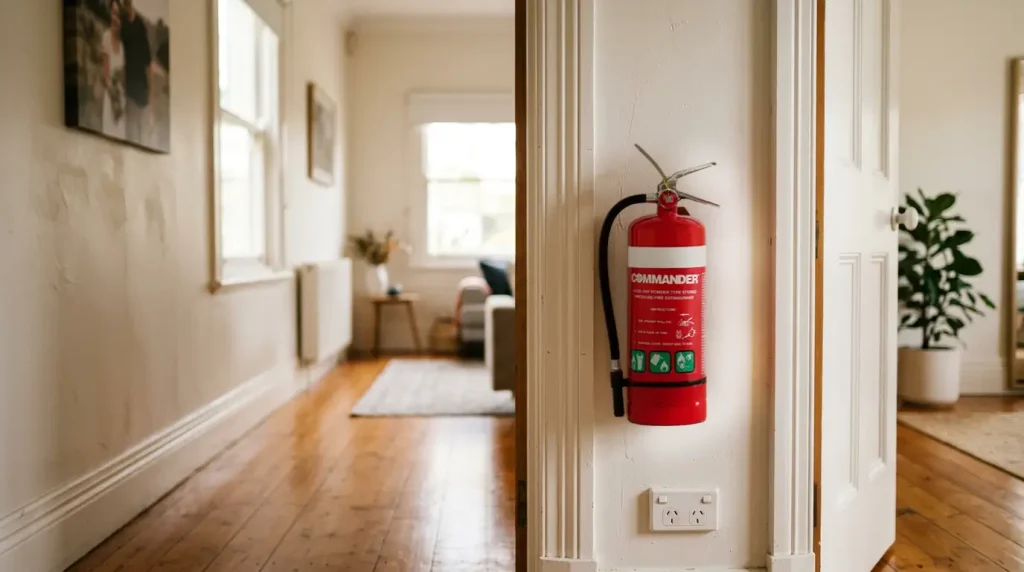
- Keep it accessible, mounted on a wall or bracket, not buried in a cupboard.
- In the kitchen, position it at least 1 metre from the stove and between the stove and the nearest exit, so you're never reaching over flames to grab it.
- Locate it near an exit, so you always have a way out behind you.
- Consider one for the garage or shed too, where flammable liquids and electrical tools raise the risk.
Make sure everyone in the house knows where the extinguishers are and how to use them. In an emergency is the wrong time to be reading the label.
How to Use a Home Fire Extinguisher: PASS
If you do need it, remember the four steps as PASS:
- Pull the safety pin.
- Aim the nozzle at the base of the fire, not the flames.
- Squeeze the handle to discharge.
- Sweep side to side across the base until the fire is out.
Only fight a fire if it's small, you have a clear exit behind you, and you feel confident. If it's growing or you're unsure, get everyone out and call 000. A fire can become unsurvivable in minutes, and no possession is worth staying for.
Keeping a Home Extinguisher Ready
A home extinguisher needs less upkeep than a workplace one, but it still needs a check. Every six months or so, look over yours:
- The pressure gauge sits in the green.
- The pin and tamper seal are intact.
- The hose and nozzle are clear.
- There are no dents, rust, or leaks.
Give a dry powder unit an occasional shake, since the powder can settle and compact over time. Once you've used an extinguisher, even partially, replace it or have it recharged. A home unit stored well can last years, but a discharged one is not something to rely on.
If you're setting up fire safety for your home and want the right combination of extinguisher and blanket, browse the Commander range or talk to our team about what suits your place.